Introduction
As urbanization accelerates and offshore engineering expands, pile foundation construction faces increasingly complex challenges. Dense urban environments impose strict limitations on construction vibration and noise, while challenging geological conditions—from dense sand layers and gravel to weathered rock—pose significant obstacles to traditional piling methods. High-pressure water jet assisted piling technology has emerged as an innovative solution, utilizing high-velocity water jets to reconfigure soil conditions around piles and address these construction difficulties.
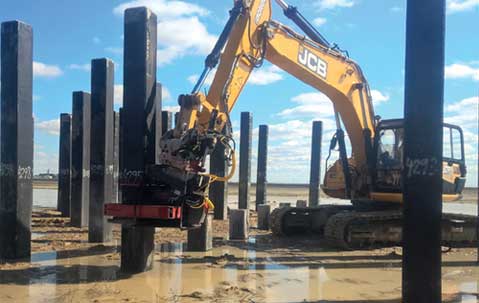
Technical Principles: The Interaction Between Water and Soil
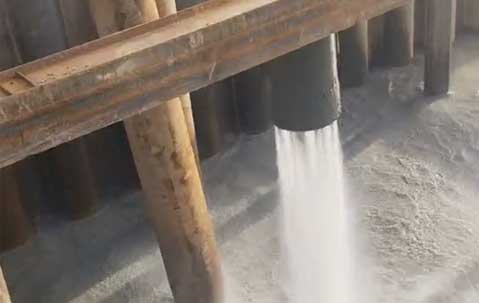
The core principle of high-pressure water jet assisted piling lies in utilizing the kinetic energy of high-velocity water jets to alter the physical and mechanical properties of soil. This technology employs specially designed nozzles at the pile tip or along the pile shaft, injecting water at pressures reaching tens of megapascals, achieving the following mechanisms:
1. Reduction of Tip Resistance: Injecting high-pressure water near the pile tip increases pore water pressure between soil particles, causing dense soil to “fluidize” and creating a temporary state where soil particles can easily rearrange . This process significantly reduces pile tip penetration resistance.
2. Reduction of Skin Friction: High-pressure water flowing upward along the pile shaft creates a lubricating layer at the pile-soil interface, effectively reducing side friction. Simultaneously, the water flow prevents soil from entering and compacting within the interlocks, further reducing resistance .
3. Cutting Through Hard Strata: For gravel layers, dense sand, and even weathered rock, high-pressure water jets function as cutting tools, breaking through hard layers and creating pathways for pile penetration .
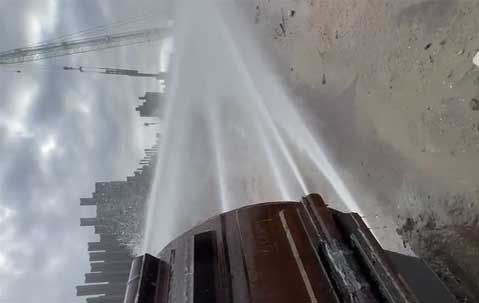
Key Equipment and System Design
Modern high-pressure water jet assisted piling systems have evolved into several mature technical solutions:
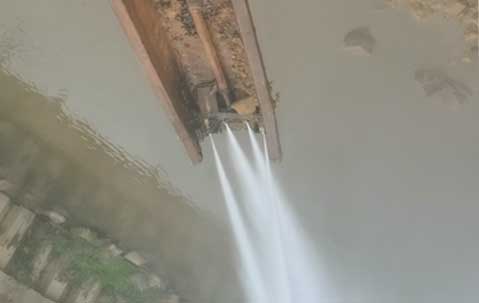
Central Transmission Pipe with Peripheral Nozzle Configuration: A typical patented device includes a central transmission pipe aligned along the pile axis and multiple water flow transmission pipes evenly distributed circumferentially around the pile shaft. The central pipe features a second nozzle at its bottom end, while the peripheral pipes have first nozzles at their bottom ends, forming a three-dimensional jetting pattern. This design both reduces friction between the steel pipe pile and soil and allows adjustment of water jet cutting force by regulating high-pressure pump pressure, demonstrating strong adaptability to varying soil conditions .
Self-Rotating Water Jet System: To address the limitations of conventional nozzles regarding jet clustering, researchers have developed self-rotating nozzle technology. By incorporating specific eccentric distances and horizontal angles within the nozzle cavity, hydraulic reaction forces drive automatic nozzle rotation. This design balances jet impact force with coverage area—the rotating jet provides sufficient cutting force to break soil while uniformly lubricating the pile-soil interface .
Prestressed Concrete Pile with Dedicated Water Jet Channels: For concrete pile applications, some designs embed high-pressure water or cement grout channels within the pile body, with at least one channel aligned axially and material outlets at the pile tip. This design both assists pile driving and enables grouting through the same channels upon reaching design depth, forming an enlarged base that increases single-pile bearing capacity .
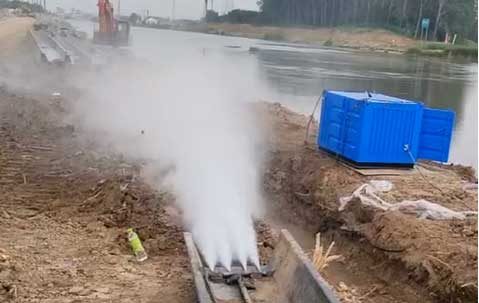
Engineering Advantages
1. Significant Reduction in Penetration Resistance
Field data demonstrates that water jet assisted technology can reduce penetration resistance by 60-80% in sandy soils . GBM Works’ Vibrojet® technology, tested in North Sea sandy seabeds, achieved penetration depths three times greater and speeds four times faster than conventional vibratory hammers .
2. Low-Noise Construction
Traditional impact hammer piling generates noise exceeding 100 dB, significantly impacting marine mammals and urban residents. Water jet assisted technology substantially reduces construction noise. Vibrojet® testing indicates that combined vibration and water jet methods significantly reduce strain levels in piles, with expected substantial noise reduction potentially eliminating the need for traditional bubble curtain mitigation measures .
3. Overcoming Challenging Geological Conditions
In strata containing gravel, boulders, or shallow bedrock, conventional piling methods frequently encounter “refusal.” High-pressure water jet assisted technology effectively addresses these obstacles through pre-drilling or water jet cutting. For example, this technology has demonstrated excellent performance in glacial till and outwash deposits across North American and European river and harbor projects .
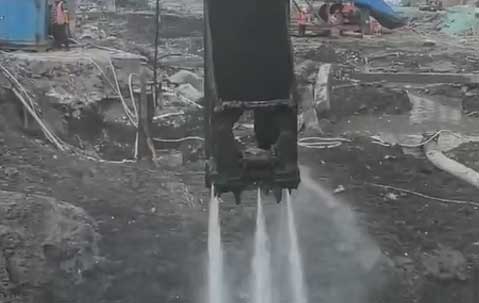
4. Enhanced Construction Accuracy
When combined with template frames for panel driving, water jet assisted technology significantly improves pile verticality. By reducing uneven resistance between pile and soil, pile deviation and twisting are substantially minimized. In major port expansion projects, this technology has achieved finished wall plumbness within 1:200
Technology Trends
Intelligent Control: Modern water jet systems are advancing toward intelligent operation. Through installation of high-frequency accelerometers, pressure sensors, flow sensors, and strain gauges, combined with data acquisition platforms, real-time monitoring of pile driving parameters enables “underground eyes” visualization of construction processes .
Multi-Functional Integration: Integration of water jet systems with grouting capabilities has become a significant development direction. The same channels that assist pile driving can also perform base grouting for enlarged pile tips, achieving “multi-purpose” equipment utilization .
Environmental Sustainability: As environmental requirements become increasingly stringent, the low-noise, low-vibration characteristics of water jet assisted technology will gain further prominence. Advanced systems already achieve construction noise levels below 70 dB, meeting requirements for sensitive urban areas .
Conclusion
High-pressure water jet assisted piling technology represents a significant transformation in pile foundation construction—from “brute force impact” to “intelligent guidance.” By utilizing water to reconfigure soil conditions, this technology successfully addresses piling challenges in complex geological environments while meeting increasingly stringent environmental requirements. With continued advances in intelligent control and multi-functional integration, water jet assisted technology will play an increasingly vital role in urban construction, offshore engineering, and transportation infrastructure development.

Please contact us for free quotation by form below. We promise the quickest response within 24 hours: